Gambling Addiction – Signs, Support and the Path to Recovery
When gambling begins to take up more and more space in your life, it can affect your finances, relationships, mental wellbeing and everyday routines. But change is possible. The first step may be recognising how gambling is affecting your life.
What Is Gambling Addiction?
Gambling addiction is not simply about how much money someone spends on gambling. One important warning sign is finding it difficult to control gambling behaviour and continuing to gamble despite negative consequences.
Gambling can gradually begin to dominate your thoughts and everyday life. You may find yourself planning your next bet, trying to win back money you have lost, or continuing to gamble even after deciding to stop.
For some people, the consequences are mainly financial. For others, gambling also affects relationships, sleep, work, education or mental health.
Signs That Gambling Has Become a Problem
Gambling problems can affect people in different ways. You do not need to recognise every warning sign for your gambling behaviour to be worth addressing.
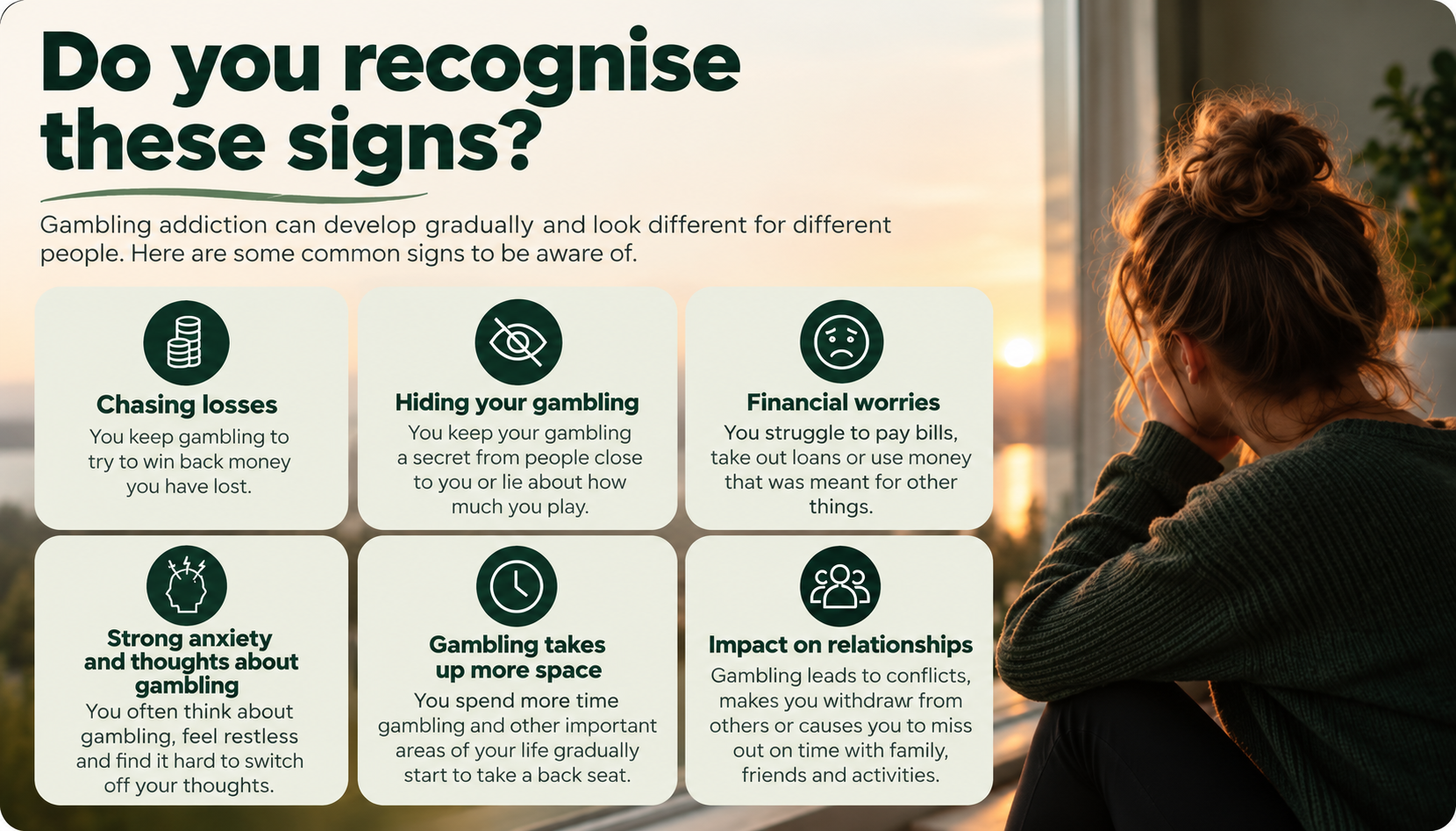
Chasing Gambling Losses
You gamble again in an attempt to recover money you have previously lost.
Losing Control
You gamble for longer or spend more money than intended and struggle to keep the limits you set for yourself.
Financial Difficulties
Money needed for essential expenses is spent on gambling, or gambling leads to loans, debt or financial stress.
Emotional Distress
Anxiety, stress, guilt or low mood become increasingly common before or after gambling.
Hiding Gambling Behaviour
You avoid telling others how much you gamble or how serious the consequences have become.
Gambling Takes Over
Thoughts about gambling, results, money or your next opportunity to gamble begin to replace other important parts of life.
Loss of Control Over Gambling
Many people trying to change their gambling behaviour recognise the experience of making a firm decision to stop, only to find themselves gambling again when an urge appears.
“I Will Only Gamble a Little”
What begins as a small bet can turn into more gambling, more money and more time than originally planned.
“I Need to Win It Back”
After a loss, the urge to recover money through further gambling can become very strong. Unfortunately, this can lead to even greater losses.
“This Time I Will Stop in Time”
Once gambling has started, it may become much harder to follow the limits that seemed clear beforehand.
“Tomorrow I Will Start Again”
Repeated promises after gambling can create a cycle of hope, gambling, consequences and new promises.
Gambling Addiction Can Also Be About Emotions
Gambling can sometimes become a way of trying to change how you feel. Stress, loneliness, anxiety, low mood, frustration or restlessness may create a desire to escape uncomfortable feelings for a while.
The problem is that any relief may be short-lived. Afterwards, financial worries, guilt or anxiety may increase, creating another desire to escape.
6 First Steps to Stop Gambling
You do not need to solve your entire future at once. Start by making it harder to continue the same gambling patterns.
Decide What You Want to Change
Put into words why you no longer want gambling to continue as it has before.
Create Distance From Gambling
Remove gambling apps, saved login details and other easy ways to return to gambling. Consider self-exclusion programmes available in your country.
Protect Your Money
Consider financial safeguards that could reduce the risk of impulsive decisions when gambling urges are strong.
Understand Your Triggers
Notice which feelings, situations, times and thoughts usually appear before you gamble.
Prepare for Gambling Urges
Decide in advance what you will do during the first few minutes after an urge to gamble appears.
Accept Support
Involving someone you trust or seeking professional support can make it easier to break an established gambling pattern.
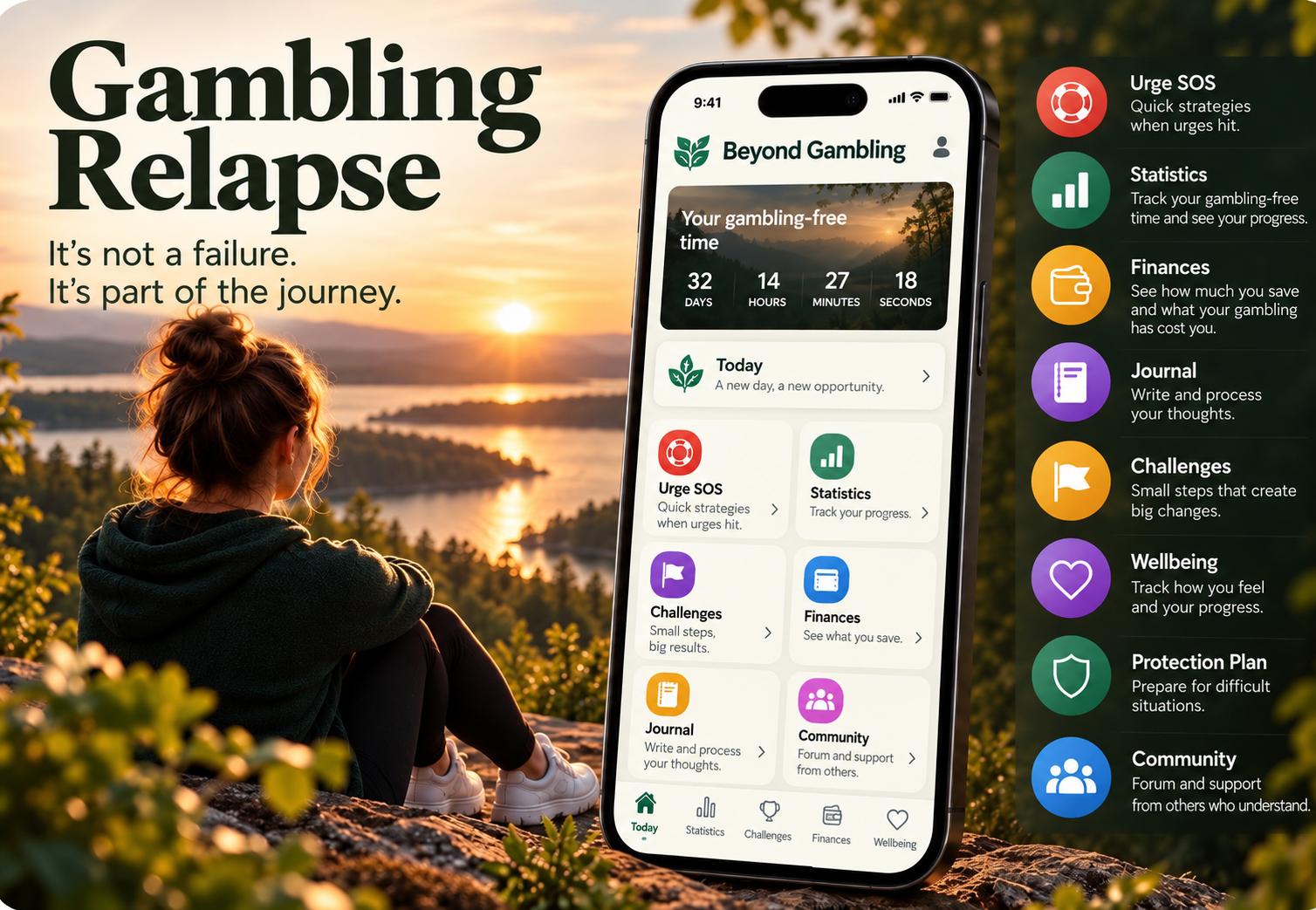
Beyond Gambling Is About More Than Gambling Itself
Different moments call for different tools. Beyond Gambling is designed to provide support through different stages of your recovery journey.
A Gambling Relapse Does Not Have to End Your Recovery
If you have gambled again after a period without gambling, it can be easy to feel that all your previous progress has been lost. But gambling again does not mean you have to continue.
Try to stop as early as possible. Avoid chasing losses and consider what happened before you started gambling.
Understanding the circumstances may help you strengthen your protection plan and prepare for similar situations in the future.
Read our guide: Gambling Relapse – What to Do Next .
You Do Not Have to Face Gambling Problems Alone
If gambling is difficult to control or is affecting your finances, relationships or mental wellbeing, professional support is available.
Beyond Gambling is a self-help and everyday support tool. It should be used as a complement to professional care, not as a replacement for healthcare, treatment or professional advice.
Our Find Support page provides information about gambling support services and ways to seek help.
More Guides From Beyond Gambling
Questions About Gambling Addiction
How Do I Know If I Have a Gambling Addiction?
Warning signs may include difficulty controlling how much or how long you gamble, chasing losses, financial problems and gambling taking up increasing amounts of your time and attention. A qualified healthcare professional can help assess whether your gambling meets the criteria for a gambling disorder.
Can You Have Gambling Problems Without Gambling Every Day?
Yes. Gambling frequency is only one part of the picture. Even occasional gambling can cause serious harm if you lose control or experience significant consequences.
Why Is It So Difficult to Stop Gambling?
Gambling can become connected to habits, emotions, expectations and powerful urges. Thoughts about winning back money can also make it difficult to stop, even when gambling is causing harm.
What Can I Do When I Experience Gambling Urges?
Try to create time between the urge and the action. Pause, leave the situation, make gambling less accessible and choose something practical to do during the next few minutes. You can also read our Gambling Urges guide .
What Should I Do If I Have Gambled Again?
Try to stop gambling as early as possible and avoid chasing losses. Once the immediate situation has settled, consider what happened before you gambled and use that information to strengthen your safeguards.
Can Beyond Gambling Treat Gambling Addiction?
No. Beyond Gambling is a self-help and support tool. It does not replace professional healthcare or treatment. The app offers practical tools that can support everyday recovery.
Start Building a Life Beyond Gambling
Track your gambling-free days and access tools for managing urges, emotions, financial worries, wellbeing and difficult moments along the way.
Download on the App StoreBeyond Gambling is a self-help and support tool. It does not replace professional healthcare, treatment or advice.